Genius of the Body
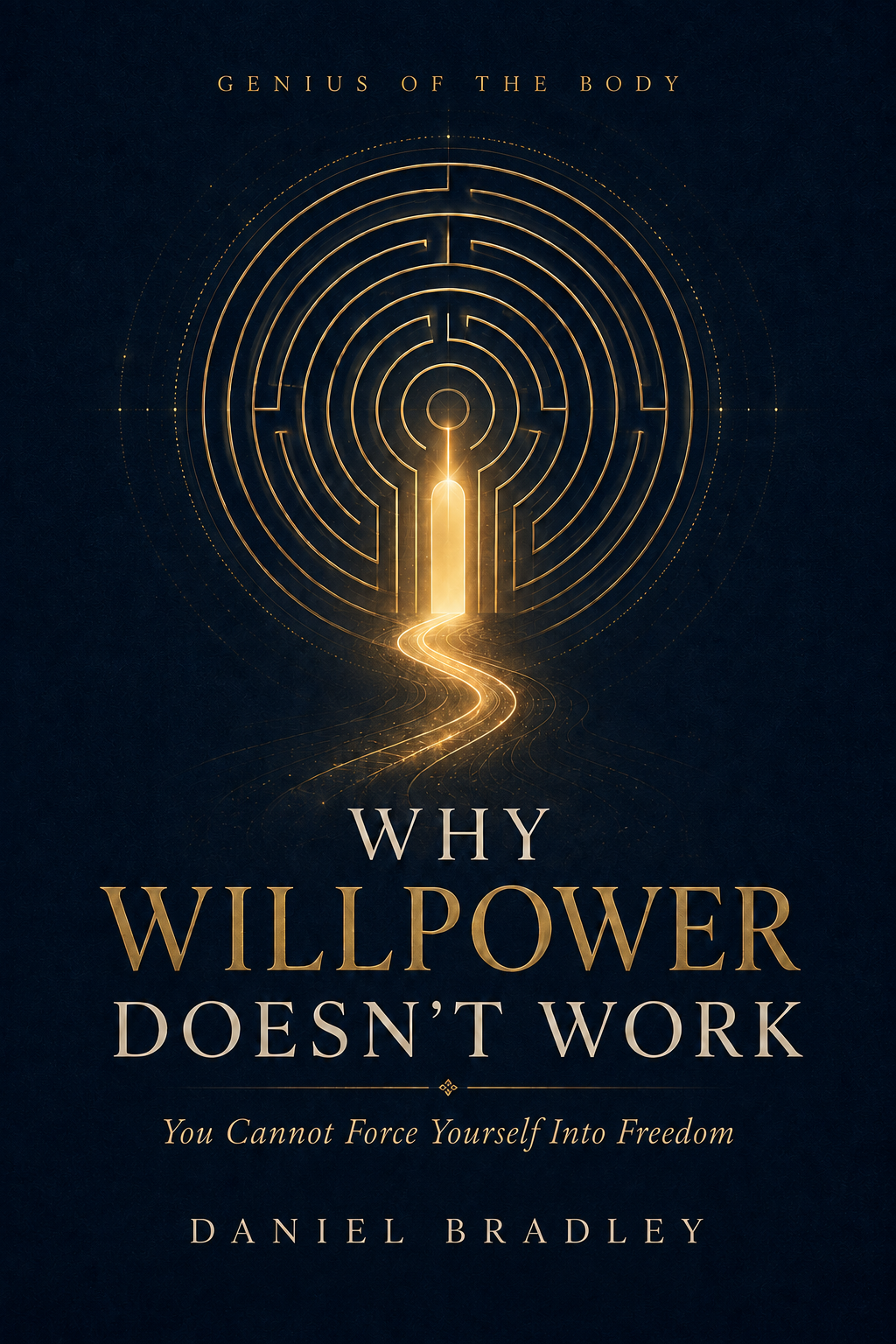
Why Willpower Doesn’t Work by Daniel Bradley — book cover
A Document by Daniel Bradley

You cannot force yourself into freedom.

You can command behavior. You cannot command being.

If willpower could make us free, the most disciplined among us would be the most joyful, and the most determined would feel the safest in love. We already know that is not what happens.

Why Willpower Doesn’t WorkYou Cannot Force Yourself into Freedom

At no cost. No purchase required. One document, delivered to your inbox — read it when you’re ready and return to it whenever you need it.

Perhaps You Have Lived This

You can decide to wake earlier. You can push through a workout, or resist an impulse for a while. But you cannot simply decide to become joyful, to stop feeling anxious, to trust love, to feel safe around other people, to forgive without emotional residue, to become spontaneous and alive, or to experience the peace you already believe is yours in Christ.

You have tried harder and only become more divided. You have made promises you could not sustain, used discipline to hold yourself together, tried to force peace, trust, surrender, purity, confidence, love — and felt that the harder you push, the more something inside tightens, braces, resists, or collapses.

You can command behavior. You cannot command being.

The Question That Pulls Us Through

Why can you know what is true, want what is good, and still be unable to make yourself feel or live it?

This is not a small question. It has followed you into every attempt at change. The honest answer to it changes everything.

◆ ◆ ◆
Movement One

The will built the prison.

What kept you safe became what keeps you shut.

Before you had language, your body was already learning whether love was safe, whether anger threatened attachment, whether being seen led to welcome or humiliation, whether breathing freely and taking up space were permitted. These were not moral failures — they were the intelligent adaptations of a small, dependent creature meeting conditions it had no power to change.

Your developing will was enlisted to build that defense — not to cry, not to need, not to feel, not to reveal fear. What began as something the child did became the way the adult simply exists.

Relational pain
the child resists feeling it
resistance becomes bodily defense
defense becomes unconscious character
the adult tries harder to change
more effort reinforces the defense

The Effort Is the Structure

Willpower fails because it approaches the wounded body with the same demand that wounded it: you are not allowed to be as you are.

Movement Two

The will cannot open it.

Every honest effort has only made the walls thicker.

The same will that once said I must not feel this is the will that later says I must stop being anxious, I must become confident, I must make myself peaceful, I must force myself to feel what I believe. The object of the effort changed; the bodily action did not — it is the same tightening against present experience.

You may have prayed, studied, confessed, tried to believe harder — and still believe you are forgiven yet carry guilt, believe you are loved yet expect rejection, believe you have peace with God yet the body remains anxious. This does not mean the gospel failed.

Just because the work is finished does not mean the body trusts it yet.
Receive the Document

If these words are naming something you have lived without language for it, you can read the whole of it.

Read Why Willpower Doesn’t Work
Movement Three

What opens it instead.

Not a stronger will. A different source of life.

Christ does not strengthen the old self so it can finally overpower itself — He brings humanity into a new source of life altogether. Freedom is not independent self-mastery; it is participation in the life of the Son through the Spirit of liberty. We are not free when we finally become powerful enough to exist without God — we are free when the separation itself is overcome and our humanity becomes alive within His life.

WillpowerFreedom in Christ
Forces change from the outsideAwakens life from within
Treats the self as a problemMeets the self with grace
Suppresses unwanted feelingMakes feeling safe enough to emerge
Demands immediate controlDevelops embodied trust
Reinforces separationRestores relationship
Attempts to manufacture lifeSurrenders to the life already given

Surrender is not giving up, and not resignation. It is the relinquishing of the effort to save ourselves through control; the willingness to notice the fear without trying to defeat it, to breathe where the body learned to brace, to let the Spirit meet what willpower could only ever suppress.

The will cannot make the body alive. But it can stop abandoning the body, and consent to the life already present there.

What You Will Find Inside

This is a concentrated, powerful piece of writing, meant to be read attentively and returned to — three movements moving from the prison the will built, to why the will cannot open it, to what opens it instead.

This is not a technique, a program, or a productivity system — it is an organic revelation of what the Gospel has always meant for the whole person.

The Two-Minute Invitation

Do not attempt to relax. Notice the effort that prevents relaxation. Relaxation cannot be commanded — but effort can be recognized, and surrendered.

The Author

Daniel Bradley is the founder of Genius of the Body, a Christ-centered embodiment ministry at the intersection of Scripture, the Church Fathers, the nervous system, and the body as the site of redemption — devoted to one thing: the finished work of Christ becoming embodied trust.

Why Willpower Doesn’t Work by Daniel Bradley — book cover
The Invitation

You cannot force yourself home. But you can stop resisting the life already given.

You cannot will yourself into joy, because joy is not an achievement. You cannot command trust, because trust grows through relationship. And you cannot create the life of Christ within you — because that life has already been given.

At no cost. No purchase required. One document, delivered to your inbox — read it when you’re ready and return to it whenever you need it. Offered freely, to strengthen faith and encourage the walk.